|
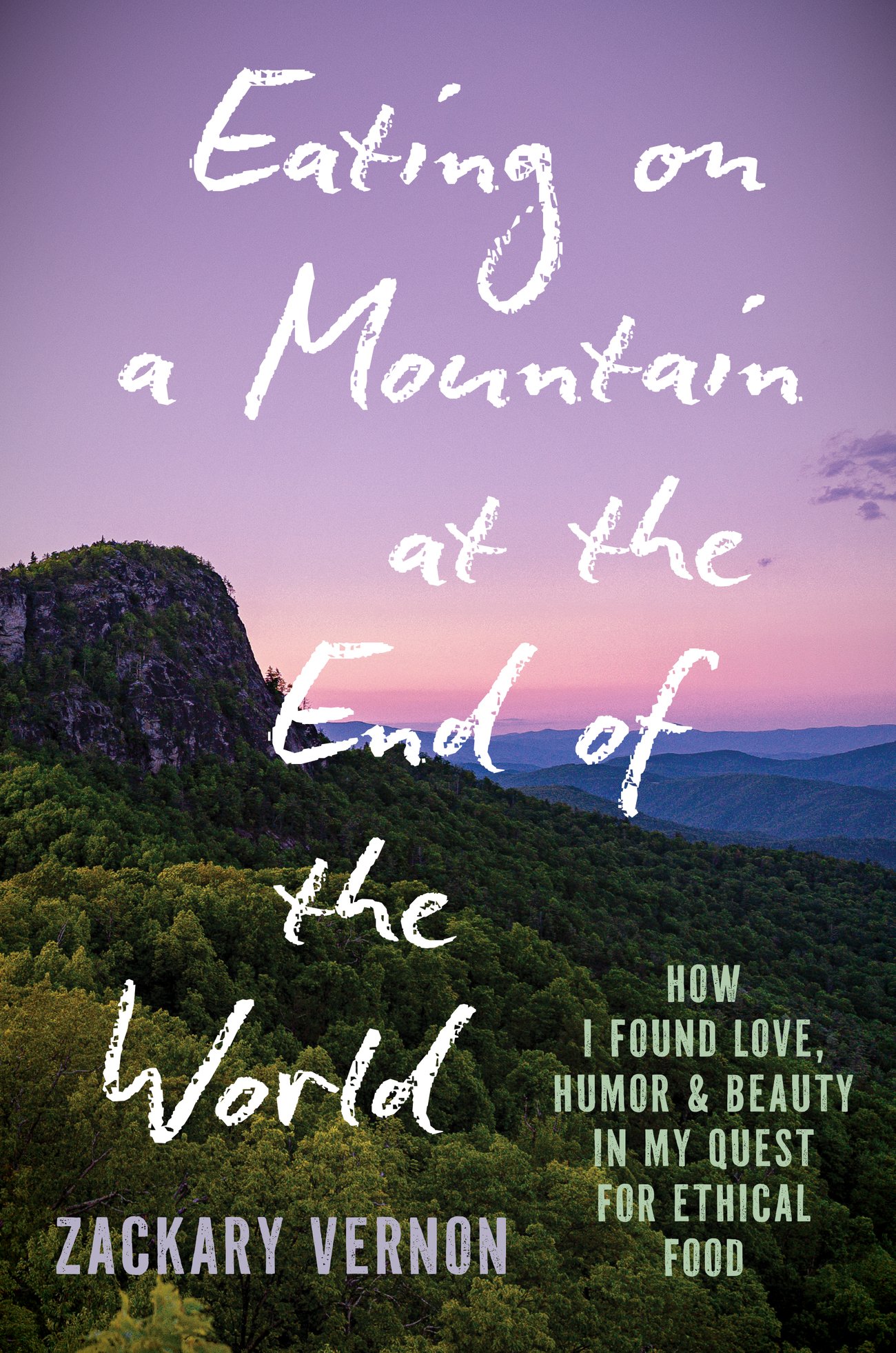
Desk: The title of the book is “Eating on a Mountain at the End of the World.” Tell me about the mountain in the title. What are you referring to?
Zackary Vernon: It refers first and foremost to the hyperlocal, so the mountain that I actually live on, which is interestingly called Valle Mountain, but then also to Appalachia more broadly. The book emerged from the decade that I've lived in Appalachia. I'm not from this region originally. I grew up on the coast of South Carolina, so a Low Country boy for the first 18 years of my life, at least. So, in some ways, the book is about the hyperlocal; it's about the bioregion that is Boone, that is my mountain, that is my yard, but it's also about this place and this region of Appalachia that I've come to really love and call home.
The “end of the world” part – that was something I was thinking about a lot in terms of the Appalachian region historically being imagined as the end of the world. I'm obsessed with this map where European explorers were trying to map not just the Americas, but the whole world … and there's this one map from 1507 you can see the mountain range that is Appalachia and it's literally the edge of the map. Next to it it has this Latin, Terra Ulteri Incognita: the land that is beyond is unknown. That idea is really interesting of Appalachia historically being this kind of end of the world. And then thinking about the ways in which it's continued to be considered this hinterland and marginalized in the national imagination. What I wanted to do in the book is center Appalachia and think about Appalachia as the center of the world, rather than the end of the world or the edge of the map. Like, maybe this place is at the vanguard of potential solutions to these big problems that we're facing, not only nationally but globally.
Desk: My assumption had been that the end of the world you were referring to was, like, we've pushed our food production to this kind of unsustainable extreme.
ZV: That's part of it, too. I do think that we're at the end of the world, not in the sense that the world is going to end literally anytime soon, but that we're at the end of the world as we've known it. Since the beginning of the industrial revolution, maybe in particular in the U.S., since the boom after World War II, there was an amazing golden summer where everything was cheap and available in terms of food and energy, and the logic of capitalism is that that's going to continue forever, and that we're somehow going to have infinite growth on a finite planet. But what we're already coming to realize is that energy and food are going to become increasingly scarce in the next 100 years. And so that moment of extreme wealth and privilege in terms of food and energy might have been a blip on the radar unless we can figure out new ways to produce energy and food that is more sustainable than just burning up all the oil and using all the land until it's completely given out.
Desk: Tell me a little bit more about the hyperlocal, about your mountain, and how you eat there.
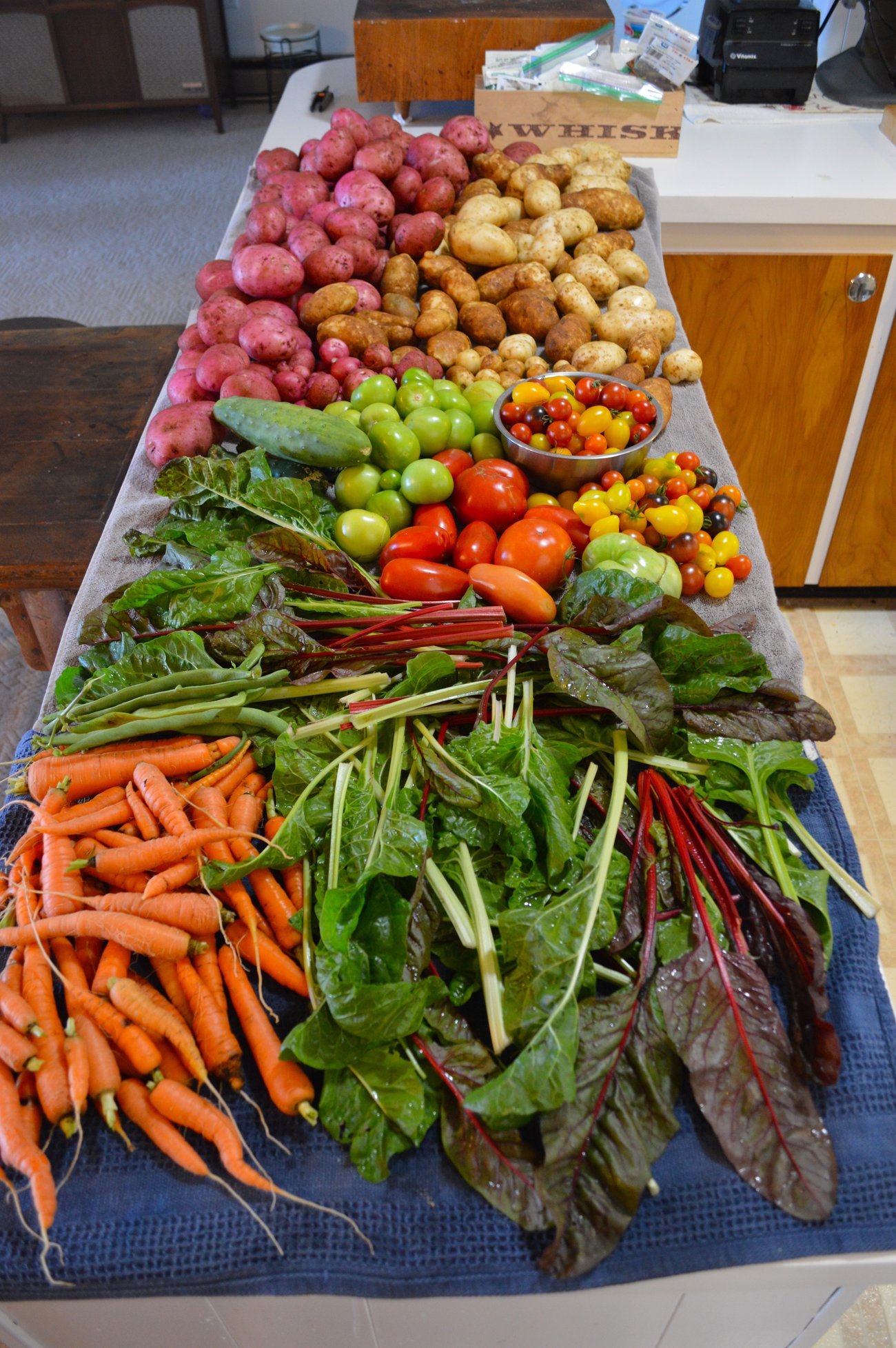
ZV: I try to eat well and eat ethically and sustainably. But a lot of the book is also about my failures to do that, and I try to be really candid about that because I feel like a lot of environmental literature and food writing sets people up to fail, in the sense that either there are these impossible standards that no one can live up to, or some writers make it seem like it's super easy to grow all your own food and have this little idyllic, agrarian fantasy life. And my point is that even when you're trying really hard, it can be really difficult to do that. Because your tomatoes get blight and you have no tomatoes for the year or because you work all day and you're tired and you can't go home and get your chuck roast out of the freezer and thaw it and then bake it for six hours so that it's delicious. Sometimes I fail just because of time. Sometimes I eat ultra-processed food for dinner, like ramen, or go to a restaurant. I really wanted the book to be about the sort of desire to eat ethically, but also not self-flagellating when I fail.
When I was in grad school and I was really getting into environmental issues and reading a lot about the troubles in the food system, I did have this really militant adherence to certain standards. I think it's ultimately kind of maddening to try to maintain that over your entire life.
Desk: The book is about your search for local, sustainable foodways outside of the industrial food production industry in our country. How did that search start for you, and how has it evolved?
ZV: It started in my childhood with my grandfather, because my grandfather was this fascinating figure who owned a farm. It was a cattle farm where he leased out the land. So it was other people's cows, but he had a massive garden. I mean, probably a garden the size of a football field just for himself. In the summer, he's living off white bread tomato sandwiches. But for the rest of the year, I swear the man just ate Vienna sausages out of a can and drank Kentucky Gentleman bourbon all day. So he was this interesting paradoxical figure where he was the romantic idea that I think we have of our like grandparents’ or great-grandparents’ generation in the South, and he was living that for part of the year and then for part of the year he was like, "Well, I'm eating Lance crackers for lunch now because it's the only thing I have available."
I spent a lot of time with him on this farm growing up. My parents would ship me off for whole summers to go stay with him in South Carolina. It wasn't even really about food at that point. It was just about being out in fields and fishing and just having a lot of land to roam around in. And then when I went to college, I started learning about environmental issues and food justice on a more intellectual level. And so I got really dedicated. In graduate school when I was living in Chapel Hill, there's a big community that's invested in those kinds of ideas. So I was really plugged into that.
And then I moved to Boston for a year after Chapel Hill, from 2014 to 2015. It was the coldest year on record. The polar vortex year. We got like 14 feet of snow that never melted. It was just there. That year did something to me where I missed so much being involved in food communities in Chapel Hill, but also, we gardened a lot when we lived in Chapel Hill. And then went to Boston and had this miserable frozen year. And so when I got the job at App State and moved back to Boone, both [my wife] Jess and I were like, "We have to get our hands dirty again. We need to be hands in the dirt. We need to be growing food, both for the ethical reasons of trying to eat outside of the industrial food system, but also just for our own psychological health." We were just ready to get back to something more elemental.
Desk: The longest — and most hilarious — essay in the book is about your time volunteering on a farm in Boone, North Carolina, where you live. Tell me about the farm.
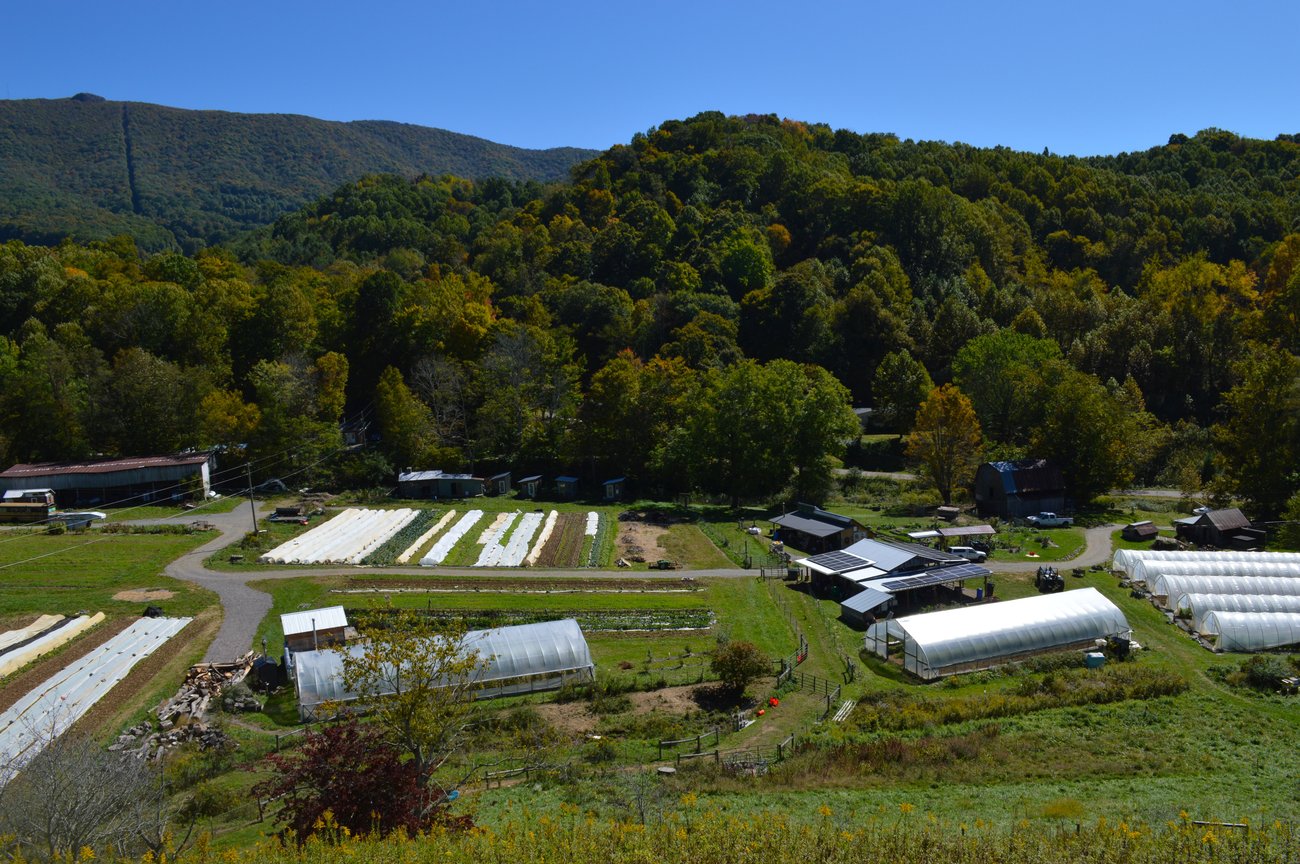
ZV: The farm is called Against the Grain. I would say it's the biggest and best of the small farms in the area. They are certified organic, certified biodynamic, and also certified real organic, which is a different category than organic because a lot of small farmers think that the organic label has been appropriated by Big Ag and is sort of greenwashed capitalism, and so "real organic" denotes a lot of things that historically people have assumed organic means but doesn't really mean anymore.
The farm is run by Holly Whitesides and Andy Bryant. They're both amazing, brilliant, interesting people who have become pretty famous both locally, but also regionally, for this farm. They run the operation, but the daily operations of the farm are really handled by apprentices. They tend to have about 12 apprentices at a time.
When I was working there it was the year I was turning 40, and I was going through a bit of a mini midlife crisis, and they were all just wide-eyed and young and fit and 21 years old, and so some of the essay ends up comparing myself to them. Both physically in the ability to work on a farm all day, but also intellectually in the sense that a lot of them are self-declared anarchists, and a lot of them are working on the farm to gain knowledge about farming so that they can go start their own little independent farms or so that they can start intentional communities. A lot of them want to get so far outside the industrial food system that they're not interested in, “Oh I'm going to be a market farm that produces food for a farmers market somewhere locally.” They're like, “No, we're getting outside the system and off the grid entirely.”
Some of that corresponded with this broader idea of individual versus systemic change because I was coming into it thinking that, OK, I'm a Democrat politically, I still want to believe in the system and want to believe that legislative changes are the most important thing. And they were just like, “No, we're burning it all down.”
Desk: Why did you want to work on the farm when you already garden … and what did you learn there?
ZV: The farm is market-driven — I don't think they're interested in making lots of profits, but they are interested in being a viable business model. And so I really wanted to see, OK, how is that working? And is it a model that could be ramped up on a larger scale or exported to different places? And could it work there?
Because what Holly and Andy are trying to do is create a farm that produces the best, healthiest food that takes into account worker rights, animal welfare, the environmental impact of the farm, but also trying to make it economically viable. And they say that a lot of these small farmers start out thinking about everything except for the economic viability part of it. So their heart’s in the right place and they want to think about worker rights and animal welfare and environmental impact, but they don't know how to do that in a sustainable way, economically speaking. [But Holly and Andy] have figured it out and they seem to be a size that is a sweet spot between being too small and therefore not economically viable — like, you're probably going to fail to make a profit — or you start getting too big and when you get too big, you start to compromise on the principles of the place.
But then also I just personally wanted to learn because I do think I'm bad at gardening. And so I wanted to see, what does this look like? I tried to be there for a full growing season, from spring through fall. I did learn a lot both in terms of big picture issues, but also just on a personal level about farming. |
|
Desk: I also live in Boone, and of all the places I've lived, I find the access to locally grown produce and meat to be the easiest. What can people without similar access do to eat in a way that is ecologically less destructive?
ZV: That's the big problem. Because even though Boone is a pretty small town, there's a lot going on here. There are a lot of people who are invested in these sorts of issues. We have a farmers' market twice a week. We have the Food Hub that functions as a sort of online farmers' market. For the size of the town, we are very lucky.
For other places, especially food deserts, it becomes much more difficult. And for everyone, eating outside the industrial food system is entirely possible, but it takes either a lot of money or a lot of time. Or maybe some of both. And so eating outside the industrial food system then becomes an upper-middle-class luxury. And farmers' markets become a kind of boutique experience where upper-middle-class people can buy their way out of whatever guilt they feel over participating in a harmful industrial food system.
I think the solution to make food more accessible to everyone and have it not be this upper-middle-class boutique experience is legislation. It has to be about monitoring the ways in which food is produced and then also disseminated across the country. And we have to subsidize that food system. This is not an original argument from me by any means. This is Michael Pollan's thing. He's been talking about it for a long time. The industrial food system, and American legislation, the Farm Bill in particular, subsidizes food all the time, but it subsidizes corn and soybeans and things like that. I think the solution that seems radical, but shouldn't be, is we subsidize good foods and make them accessible to everyone. So both nutritious foods, but also sustainably produced foods, so that they're accessible to everyone, not just to upper-middle-class or very wealthy people. You subsidize the broccoli and the squash and the carrots, including those things produced by small farms rather than the behemoth farms that are just producing 3,000 acres of soybeans or corn or whatever the case may be.
Desk: You pose a question in the introduction to the book: “When, in this fleeting life, should we forgo gastronomical pleasure for the sake of nature and future generations of people?” Do you feel like you're closer to an answer today?
ZV: Yeah, I think so. Pleasure was a big part of the book that I wanted to think about because I feel like it's left out of the conversation a lot. Because there are so many cultural elements to cuisines regionally that I love that might have ingredients that are produced on major industrial farms. I wanted to think about the moments where we make the bad decisions for whatever reason, be it this is a cultural tradition or we're at a restaurant, or we're going over to a friend's house. I don't ever want to be the kind of person who's like, “Was this squash grown in Watauga County?” I just never want to be that ungrateful sort of guest.
So there are times when I definitely choose pleasure and try not to castigate myself for that choice. Eating meat is one of the big questions for me that I've wrestled with over time given the carbon impact particularly of beef production.
The happy medium that I've tried to come to is eating at home in particular, I try to make the best possible choices and eating at home when I'm going to consume meat, I try to make sure that it's from farms like Against the Grain where I can feel good about the life that the animals led, the workers that took care of that animal for its life, and the environmental impact of it. When I can control the situation, like when I'm eating at home, I try to make those kinds of choices that I can feel good about. But not holding myself to this impossible standard 100% of the time because it'll just inevitably fail or lead to awkward situations or a lack of pleasure — you know, denying myself pleasures in this fleeting life. |