|
By Olivia Cohen, The Gazette & Cassandra Stephenson, Tennessee Lookout
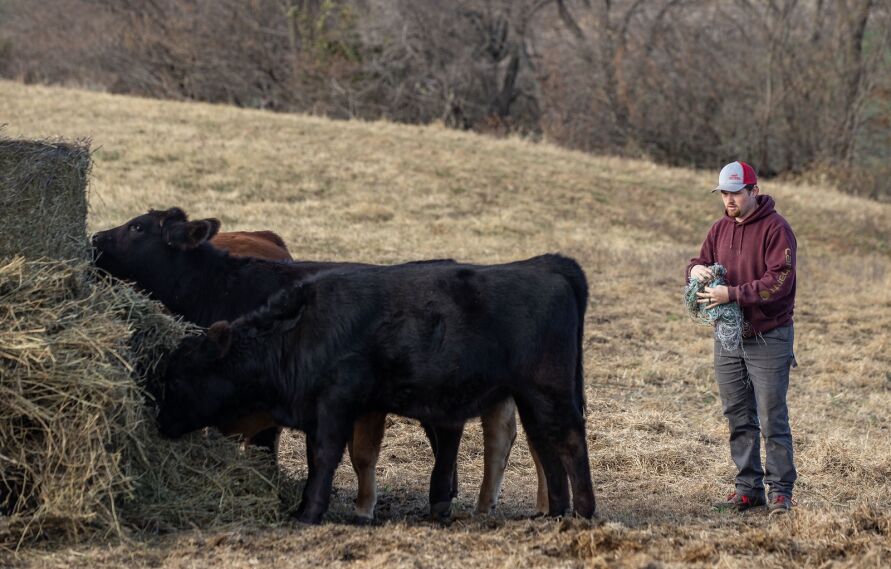
MONTEZUMA, Iowa — Ben De Boef grew up working on his grandfather's 400-acre farm in Montezuma, Iowa, and hearing stories about it.
"I loved it since I was a kid," said De Boef. "I didn't really want to do anything other than farm."
Now 23 years old, De Boef grows corn, soybeans and some alfalfa on his grandfather's land in south-central Iowa with his wife and young daughter. A couple of years ago he took some college-level agriculture classes to prepare himself to expand his operation. But when he tried to rent an additional 1,000 acres of farmland De Boef said landlords were skeptical of leasing to a young farmer.
"I can understand (why) they didn't want to rent it to someone who was just starting out. I don't have any financial backing," De Boef said. "I just don't think it was God's timing. It just didn't work out for me."
Like farmers before them, those working the land today have to figure out how to run a business in a precarious and changeable market. But today's ag environment is full of new challenges, too. Consolidation is squeezing out smaller family farms and finding land is difficult and expensive. Inflation, erratic weather and tariffs implemented by the Trump Administration put extra pressure on farmers in 2025, particularly those that raise commodity crops typically exported to China. Young farmers who are just entering the ag world are facing hurdles that previous generations didn't have to clear.
Struggling to access, afford land
Kristiana Coutu, director of the Beginning Farmer Center at Iowa State University, said land access is "the number one hurdle" new farmers face across the country, but especially in Iowa.
"It's hard," Coutu said. "Oftentimes you'll see beginning farmers lease or rent at first before buying just because it is difficult to access land and it takes time."
Coutu said that finding available land to lease can be an issue, too, and the costs are high. When a farmer does find land, she says he or she often stays on the rented land longer than they anticipated.
"Maybe they're renting for a certain amount of time on land that isn't ideal for them, but it allows them to get started, build equity (and) gain their farming skills," Coutu said. "Sometimes it takes time for that forever farm, or the more permanent farm, to come along."
When they're ready to buy, there's another set of hurdles. According to Iowa State University's extension service, the statewide average cost of farmland was $11,467 per acre as of November 2024, a 126% price increase over 2010 prices, which averaged $5,064 per acre.
In Arkansas, between 2010 and 2024, the average cost of farmland grew from about $2,500 per acre to just over $4,000 per acre — marking a 60% increase — according to the Arkansas Farm Bureau.
The price of good cropland in Missouri grew by nearly 200% to about $8,596 per acre during the same period.
Some of the most expensive farmland is in the Midwestern Corn Belt but throughout the Mississippi River Basin many states saw farmland real estate values increase by up to nearly 8% between 2024 and 2025 alone, according to the U.S. Department of Agriculture.
Prices are growing because farmers still see long-term income potential, but also due to competing land uses, like renewable energy development, and interest from investors, according to the American Farm Bureau Federation.
Rachel Burke, senior beginning farmer engagement coordinator with the nonprofit Practical Farmers of Iowa, said that even farmers lucky enough to have family land can often experience transition issues.
"A parent or grandparent might not be ready to transition, but the beginning farmer is and navigating that conflict between family and business," Burke said. Professional land transfer navigators can help farming families talk through expectations around business transitions as non-biased third parties, preserving family relationships.
"So much conflict, from what I hear from beginning farmers, comes from unknown expectations," Burke said.
De Boef farms on land owned by his grandfather and father, and leased land. He splits the inputs and crops with his grandfather and raises livestock. Despite farming full-time, the majority of his income comes from flying drones to spray and seed fields in the summer.
"Trying to eke out a living (farming) from square one was just not possible," De Boef said.
De Boef said last year wasn't as profitable as he had hoped — bad weather and
disease affected his yields and prices for his crops have been low. A trade war stemming from tariffs imposed by the Trump administration was particularly painful for soybean growers.
"I just started to farm two years ago, I don't know what it was like the last time crop prices were really high," he said. "But all in all, it is getting tougher to make money."
Despite that, De Boef plans to look for opportunities to work more land in the future.
|