 |
|
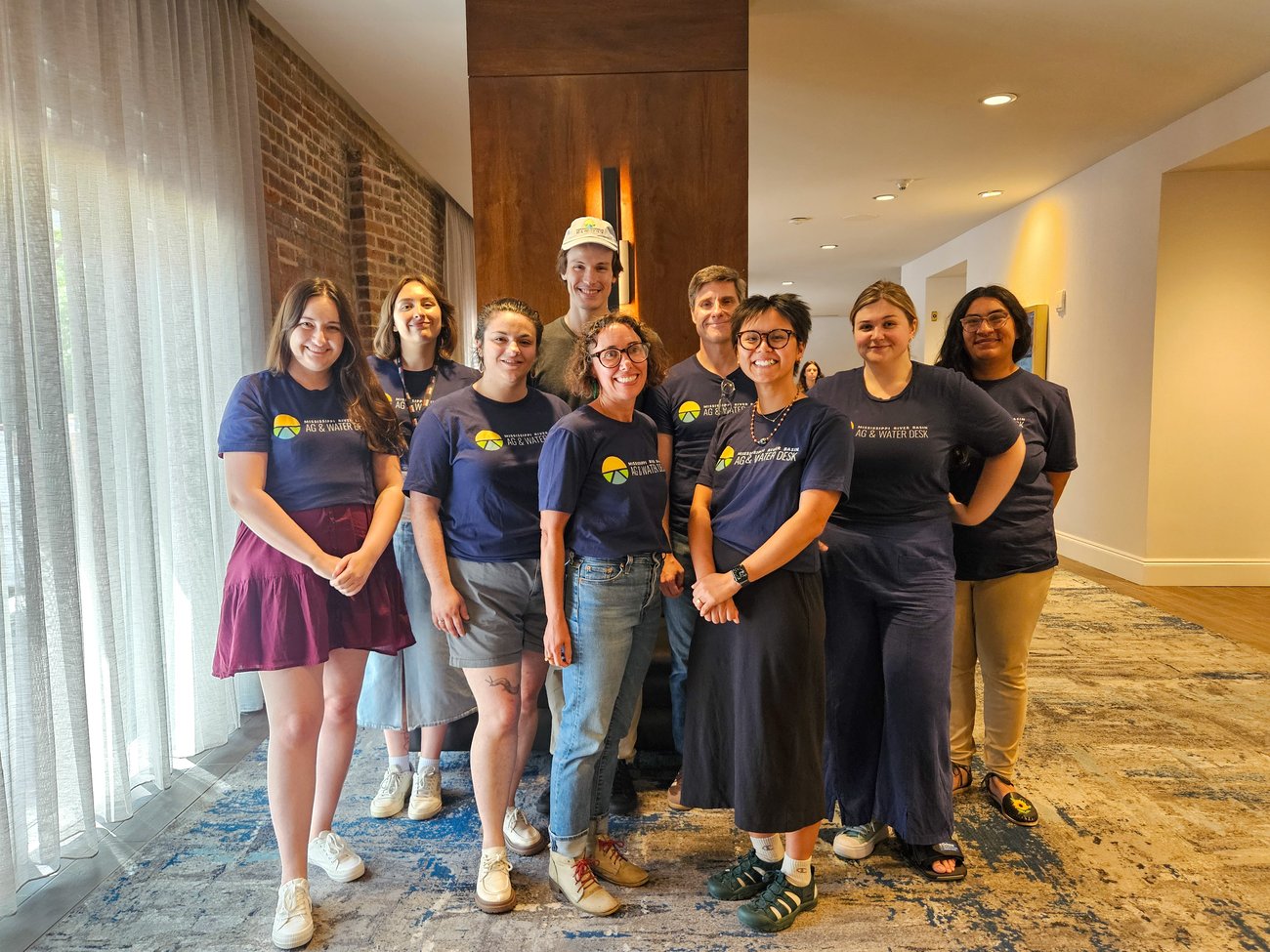
New and returning Report for America corps members gathered in New Orleans last week for training and team building. The Desk's attendees included, from left to right, Cassandra Stephenson (Tennessee Lookout), Rose LaForest (NinePBS), Stella Mayerhoff (KAXE), Illan Ireland (Mississippi Free Press), Cheree Franco (Verite), Chas Sisk (Ag & Water Desk), Lina Tran (Ag & Water Desk), Elise Plunk (Louisiana Illuminator) and Maria Peralta-Arellano (WXPR).
|
|
Dear ,
Journalism is a trade one learns by doing. Technical knowledge can be an asset, but the task of answering people’s questions starts with learning what questions to ask. And the only way to do that is to start reporting.
Last month, the Desk welcomed six new Report for America corps members. Report for America is a national service program that places journalists in local newsrooms to report on undercovered issues and communities. Reporters' experience levels vary — some are just out of college, others have decades of reporting experience — but almost invariably, these journalists come to the program seeking to learn something new.
The Desk partners with Report for America to help those corps members learn how to cover agriculture, water and the environment. Our new corps members’ first bylines show they’re quickly getting the hang of it.
|
|
|
|
|
|
Minnesota is historically water-rich, but in the north-central part of the state, Stella Mayerhoff has been reporting for the public radio station KAXE on the implications of a long-running “storage drought,” a condition that occurs when lakes lose more water than they recover in rainfall. Portions of Minnesota have missed out on half a year’s worth of precipitation since 2020.
|
|
|
|
|
|
Together, Maria and Stella’s reporting raise an interesting question: Is this drought, which extends across the headwaters of the Mississippi River, a warning about climate change or simply part of the natural rhythms of the watershed?
|
|
|
|
Covering water is just one part of the Desk’s mission. Down at the southern end of the basin, Cheree Franco’s first byline for the nonprofit news site Verite followed the aftermath of cuts to a federal program that funded purchases from local farmers for food banks and schools. Louisiana responded by setting aside $3 million to help local farmers buy “infrastructure” — equipment, coolers and other necessities to harvest, store and deliver fresh food — and adding guardrails to ensure the money is spent appropriately. But that allocation was soon slashed, and only a small fraction has been granted. |
|
|
|
Meanwhile, the Arkansas Times’ Elizabeth L. Cline has been contemplating the spiritual side of nature. In one of her first pieces since joining the Desk, she wrote about the rise in popularity of birdwatching and lamented the death of a Muscovy duck she had been watching since it was a hatchling. |
|
|
|
In the coming weeks, Elizabeth and our remaining new corps member, Rose LaForest of NinePBS in St. Louis, will be reporting on alpha-gal, the emergent tick-borne disease that causes sufferers to suddenly become allergic to mammalian products, including meat. That’s yet another example of the deeply reported work that can be done when local news organizations have reporters dedicated to the environment, ag and water beats. |
|
|
|
Not enough newsrooms, large or small, have such reporters. But without them, who would look into whether a government program to support local farmers is working? Who would monitor the water levels in the rivers and lakes that feed the basin? And who would contemplate the best way to mourn the death of a beloved bird?
The addition of a new cohort is an exciting time for the Desk. We hope that you’ll start to follow these reporters and that you’ll be just as excited by their work as we are.
|
|
|
|
Sincerely,
Chas Sisk
Editorial Director,
Ag & Water Desk |
|
|