|
Looking for solutions amid the doom and gloom |
 |
|
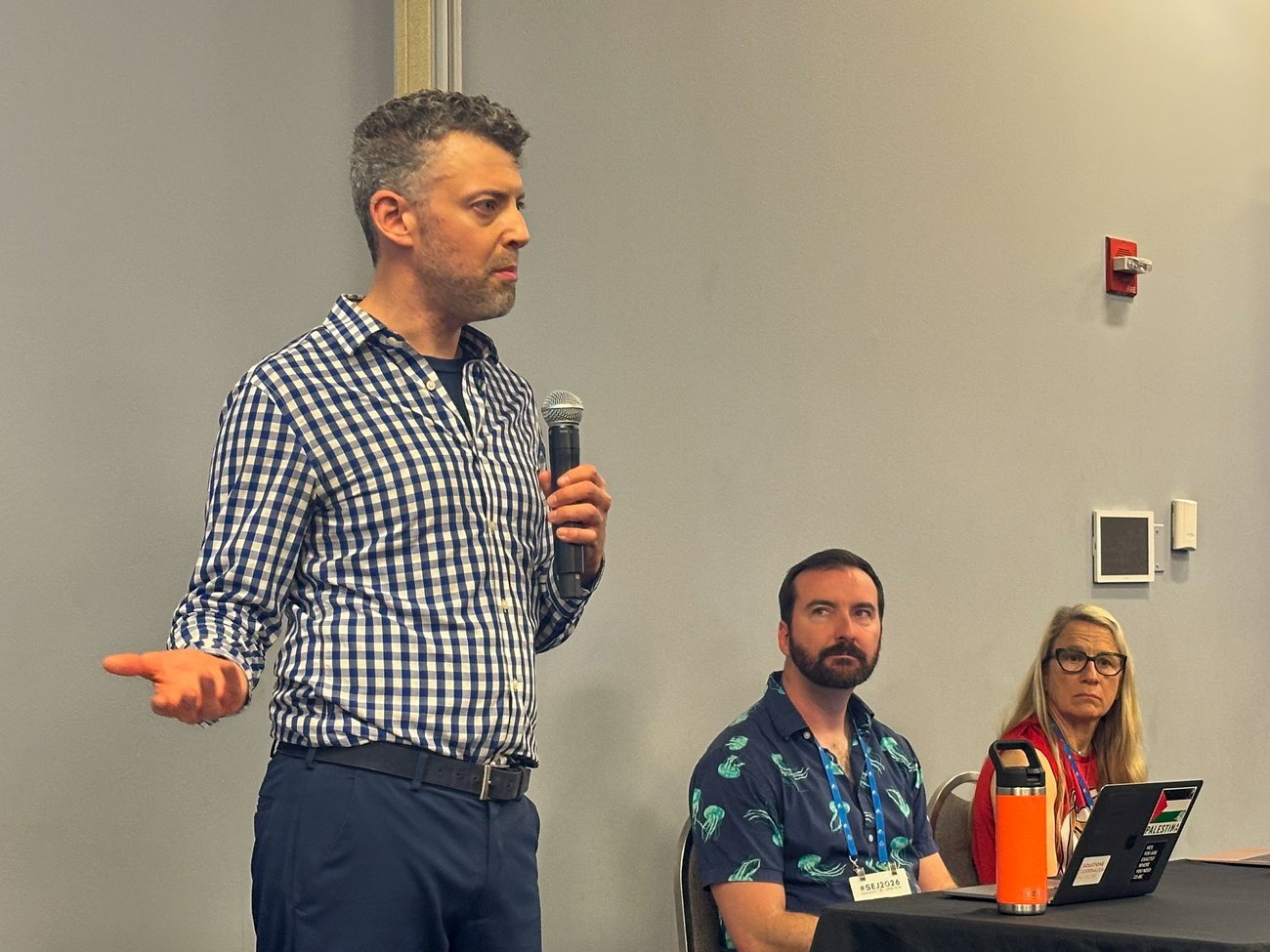
Bennet Goldstein co-leads a session on solutions journalism at the Society of Environmental Journalists Association's annual conference. (Ag & Water Desk)
|
|
🙌 Before we turn it over to Bennet, a word of thanks: We hit our goal of hearing from 100 of you in our audience survey.
We'll share insights in a future newsletter. We appreciate your feedback!
|
|
Dear ,
Even as a journalist, I catch myself avoiding the news when I start my day and wind down my evenings. I have a couple of mental alarms that are triggered by headlines that include words like “ice caps,” “wildfires” and “storms.” Reading them leaves me on edge. I’m already immersed in the doom and gloom just by living in the world. Do I really need another reason to feel bad today?
But, at least professionally, withdrawing isn’t an effective way of coping with the world’s most pressing environmental concerns — particularly if one hopes to improve humanity’s collective experience.
Here, reporters can play a special role by reframing their senses of what makes something newsworthy and building relationships with audiences. In some instances, awareness of crises, such as climate change, is so widespread that elaboration in the press doesn’t have to be a reporter’s focus.
Why not also inquire about solutions?
Recently, I helped lead a workshop at the annual Society of Environmental Journalists conference about reporting on environmental news with a solutions lens.
At the most basic level, solutions reporters evaluate how well a response to a problem works. They use their investigative tools to sleuth for answers about the solution itself: What parts of a solution are working? What are the solution’s limitations? What does the available evidence say? What do critics think? Can the solution be replicated?
For much of my career, the idea of writing about solutions often conjured images of a sugarcoated ice cream parlor whose glare distracted from the inadequacies of society’s responses to the world’s most pressing problems.
I continue to see value in recognizing harm, especially when it’s unequally distributed. But when unremitting media exposure to seemingly hopeless situations leads to despair and apathy, I question whether journalists are receiving enough opportunities to use their talents in public service.
|
|
💡 DESK STORY: Here’s what communities can do when data centers arrive
|
|
In the case of existential crises, like climate change, news consumers might seek comfort in inspirational stories. Anything to distract from those stranded Arctic polar bears. There is value to celebrating the unsung, especially if it motivates others or offers a taste of agency.
But emotions are not the primary concern of solutions journalism; its practitioners analyze responses to problems, not the responders. If every solution depended upon the deeds of an exceptional Good Samaritan, what is a town to do if it can’t find someone nearby? Communities also aren’t passive victims who need saving.
Ultimately, a solutions reporter isn’t advocating for a particular response. They write about what happened after a solution was implemented.
Even a solution that doesn’t live up to its promises is worthy of examination. Some of the most valuable insights come from “failures.” Exploring a solution’s strengths and weaknesses enables people to borrow and tinker, potentially creating something more effective or locally relevant.
But environmental problems seem so big.
One way to shrink a crisis into a manageable bite is to focus on a pressing local issue. If a city struggles with automobile smog or fertilizer runoff, maybe somewhere else, people have done a better job improving their air or water quality — possibly at less cost and more equitably.
It can feel empowering to unearth examples of communities testing solutions in the face of environmental catastrophe. They are the best experts of their own lives and needs. Building bridges where solutions can be tested and shared makes them stronger. The journalist who gets to open doors to new possibilities offers a powerful antidote to hopelessness during a time of environmental tumult.
|
|
|
|
|
|
Sincerely,
Bennet Goldstein
Reporter,
Ag & Water Desk |
|
|