Share
Our partners at Investigate Midwest explore how decades of industrialized farming, pressure from chemical manufacturers and federal farm policy have left many producers relying heavily on pesticides.
 ‌ ‌ ‌ ‌ ‌ ‌ ‌ ‌ ‌ ‌ ‌ ‌ ‌ ‌ ‌ ‌ ‌ ‌ ‌ ‌ ‌ ‌ ‌ ‌ ‌ ‌ ‌ ‌ ‌ ‌ ‌ ‌ ‌ ‌ ‌ ‌ ‌ ‌ ‌ ‌ ‌ ‌ ‌ ‌ ‌ ‌ ‌ ‌ ‌ ‌ ‌ ‌ ‌ ‌ ‌ ‌ ‌ ‌ ‌ ‌ ‌ ‌ ‌ ‌ ‌ ‌ ‌ ‌ ‌ ‌ ‌ ‌ ‌ ‌ ‌ ‌ ‌ ‌ ‌ ‌ ‌ ‌ ‌ ‌ ‌ ‌ ‌ ‌ ‌ ‌ ‌ ‌ ‌ ‌ ‌ ‌ ‌ ‌ ‌ ‌ ‌ ‌ ‌ ‌ ‌ ‌ ‌ ‌ ‌ ‌ ‌ ‌ ‌ ‌ ‌ ‌ ‌ ‌ ‌ ‌ ‌ ‌ ‌ ‌ ‌ ‌

Weekly newsletter: July 15, 2026


View in browser | Forward to a friend | Subscribe

‘In every room, every hand would go up’: Panelists discuss cancer, pesticides and environmental risks

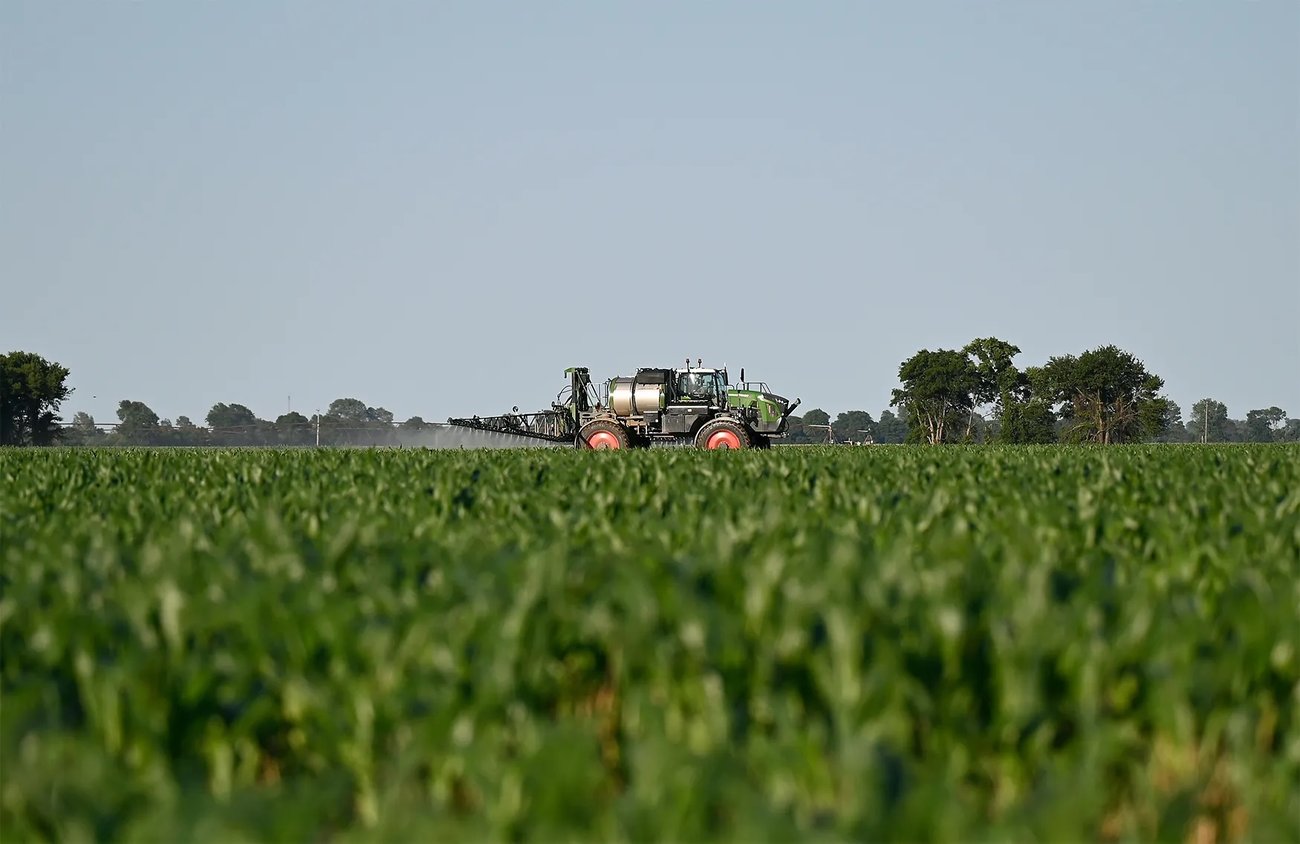
A farmer sprays pesticides, which are a classification of substances utilized to protect crops, on May 21, 2025, in Senath, Missouri. (Michael Baniewicz/Investigate Midwest)

Decades of industrialized farming, pressure from chemical manufacturers and federal farm policy have left many producers relying heavily on pesticides.

Dear ,


This week, we want to share a recent report from a panel hosted by our partners at Investigate Midwest. Much like the Ag & Water Desk, they're focused on the health and environmental impacts of pesticides recently. Lauren Cross reports on their event in May:


Rising cancer rates in Iowa and other farming states are becoming impossible for communities to ignore, experts said in a panel earlier this year. 


During an Investigate Midwest panel discussion on pesticides and public health, speakers pointed to growing concern over environmental exposures tied to industrial agriculture, including pesticides, nitrate contamination, PFAS and radon.


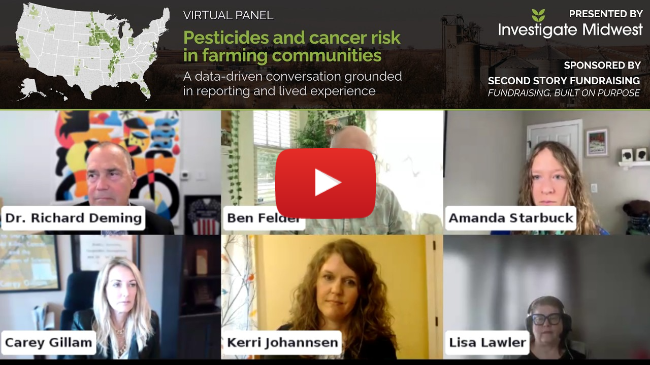
Panel: Pesticides and cancer risk in farming communities

Panelist gather virtually to discuss pesticides and cancer risk in farming communities. Click the image to watch the full event. (Investigate Midwest)

The virtual event featured Dr. Richard Deming, oncologist at the MercyOne Cancer Center in Des Moines; investigative journalist Carey Gillam; Iowa Environmental Council policy director Kerri Johannsen; Food & Water Watch research director Amanda Starbuck; and Iowa resident Lisa Lawler, a breast cancer survivor first diagnosed last year.


The panel discussion — sponsored by Second Story Fundraising — is part of Investigate Midwest’s broader reporting project examining pesticide use, cancer rates and health concerns in agriculture communities. 

A nationwide analysis found that the 500 counties with the highest pesticide use per square mile are located in the Midwest. Sixty percent of those counties also had cancer rates higher than the national average of 460 cases per 100,000 people, according to an analysis of data from both the U.S. Geological Survey and the National Cancer Institute.


Johannsen said the Iowa Environmental Council, in partnership with The Harkin Institute, held more than a dozen listening sessions across Iowa last year and repeatedly heard the same stories from residents.


“One (question) we would ask was, ‘Have you or someone close to you had a cancer diagnosis?’ And in every room, every hand would go up, and people would kind of look around at each other and it was just kind of a moment of realization that this was a real problem in their community,” Johannsen said. 


Lawler, who grew up on a farm in Hardin County, Iowa, said she was diagnosed with breast cancer in April 2025 after moving back to her hometown years earlier to help care for her parents. 


Lawler said she pursued genetic testing after her breast cancer diagnosis because her mother had also developed breast cancer. The testing did not identify common hereditary breast cancer markers, she said, raising concerns about possible environmental factors.


She and other panelists stressed that farmers are not to blame.


“They are people that are hard working … and consider themselves good stewards of the land,” she said. “What are they being told that they need to use on their land? That’s the crux of it.”

Read More: Pesticide manufacturers ask lawmakers for immunity from lawsuits by sick farmers, reporting by Desk reporter Estefanía Pinto Ruiz of KWQC.

Panelists described modern ag as a system shaped by decades of industrialized farming, chemical manufacturers and federal farm policy that has left many farmers heavily reliant on pesticides. 


Gillam, author of “Whitewash” and “The Monsanto Papers,” said glyphosate use surged after Monsanto introduced genetically engineered crops designed to survive direct spraying, eventually contributing to resistant weeds and heavier chemical use.


“We sit here today, with our agricultural production, our food production, very much directed by the company selling the seeds and the chemicals, who direct our lawmakers, policymakers, our leaders and our regulators how to oversee these crops (and) what to say about their safety,” Gillam said.


Deming said Iowa’s second-highest cancer rate in the country likely stems from a combination of factors, but argued the state’s widespread use of agrichemicals and unusually high radon exposure warrant serious attention.


“The reason that we need to look at the environment is there’s a great percentage of our land that is under (agricultural) cultivation utilizing chemicals, and there’s ample evidence that some of these chemicals increase the risk of cancer,” Deming said. 


Panelists also discussed ongoing litigation involving pesticide manufacturers, including Bayer, and a pending U.S. Supreme Court decision that could shape whether chemical companies can still be sued for failing to warn consumers about cancer risks tied to their products.


The conversation frequently returned to the tension between modern ag production and public health concerns. Starbuck argued the U.S. has become increasingly dependent on chemical-intensive commodity production, leaving many farmers financially locked into systems where a large share of Midwestern corn is used for ethanol, animal feed and processed food ingredients.


Very little actually feeds people directly, Starbuck said. 


“(Farmers) didn’t build this system," she said. "And in fact, it’s the system that really is not profitable for the majority of farmers. Most farmers are in the red year after year, and it’s very difficult to break free from it. So I think we also need policies in place to … give farmers both the financial resources and the education that they need to be able to shift to more diversified systems and to find markets for their products.”


Audience members also raised concerns about pesticide drift, concentrated animal feeding operations and rural access to cancer care.


The panel comes as state legislatures and courts across the country continue debating pesticide regulations, company liability protections and the environmental impacts of industrial agriculture.


The Mississippi River Basin Ag & Water Desk is an independent reporting network based at the University of Missouri in partnership with Report for America, with major funding from the Walton Family Foundation. Click here for a map of the basin and our partner newsrooms.


Reach us at info@agwaterdesk.org or by replying to this email. 


Email Marketing by ActiveCampaign