|
By Halle Parker, Verite News and Ag & Water Desk Expert Journalist
When Mark Schleifstein took his first reporting job at a small Virginia newspaper in 1975, journalists dedicated to covering environmental issues were few and far between. It wasn't until he stumbled upon a trail of wastewater runoff that he found his calling.
For years, a Black community outside of Suffolk, Virginia, had been left out of the local sewage system, still relying on outhouses. Some of the waste from the outhouses emptied into a nearby lake.
"It was my first environment story without knowing it was an environment story," Schleifstein said.
It was also one of his first stories to stir government officials. After the story ran on the Sunday front page, the mayor of the larger city of Norfolk called his publisher, and Schleifstein was called into the publisher's office. The mayor wasn't happy with the article.
"The lake that the material is running into is Norfolk's water supply," the publisher told Schleifstein, making the story even bigger than he thought. "I went, 'Well, that's neat.'"
|
 |
|
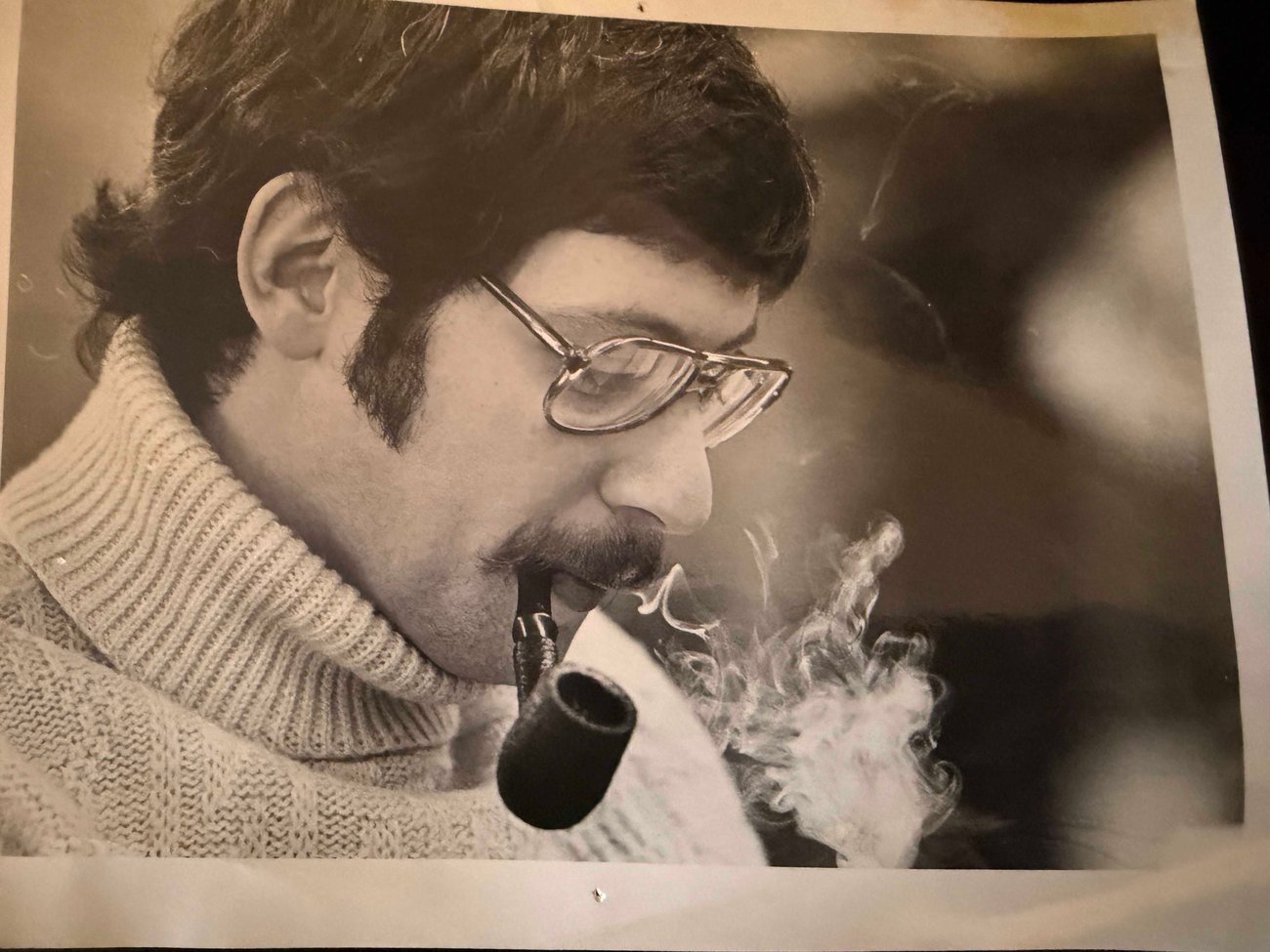
Mark Schleifstein early in his tenure at the Times-Picayune in New Orleans, before they banned smoking in the newsroom. Photo courtesy of Mark Schleifstein |
|
In this case, the outcry didn't lead to any immediate change for the community. But it set Schleifstein on a nearly 50-year-long environmental journalism career. Regardless of his beat, the environmental angle was always on his mind, and, for decades, he advocated for his employers and other news outlets to do the same.
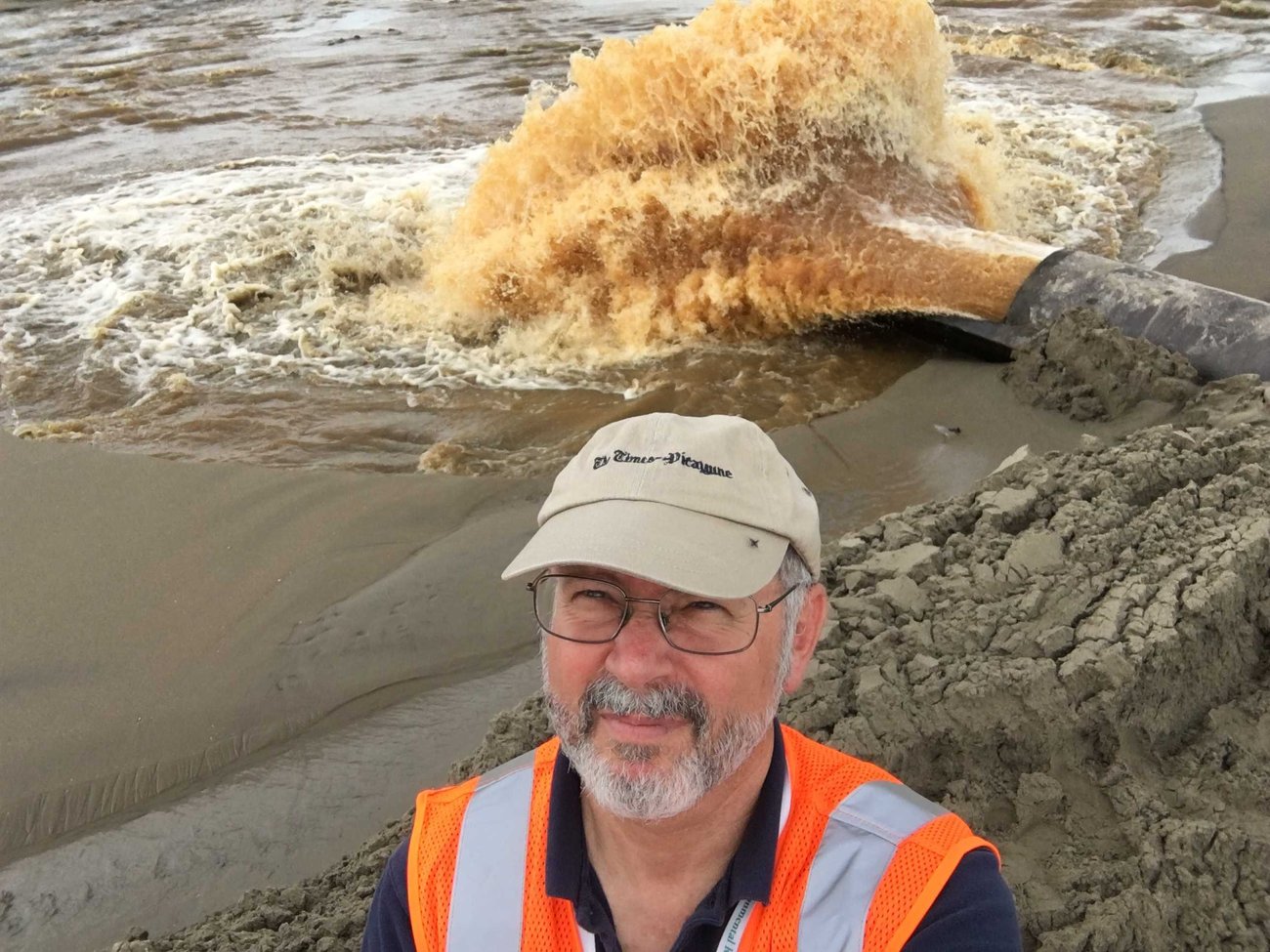
Schleifstein currently serves as a senior advisor for our Mississippi River Ag & Water Desk. After receiving dozens of awards, including two Pulitzer Prizes, he received two major honors in his first year of retirement: the Lifetime Achievement Award from New Orleans-based nonprofit Coalition to Restore Coastal Louisiana and the David Stolberg Meritorious Service Award from the Society of Environmental Journalists.
The Lifetime Achievement Award recognized Schleifstein's 40-year tenure at the Times-Picayune in New Orleans, where he closely followed and drew attention to the state's ongoing coastal land loss crisis and the risk it posed to the state's future. One of his series, honored by the American Society of Civil Engineers, foretold New Orleans' vulnerability to catastrophic hurricane just three years before Katrina. He had followed the movement to restore Louisiana's coast long before it had gained traction with his characteristic mix of investigations and comprehensive explanatory reporting.
Schleifstein refers to this work as his contribution to "tikkun olam," a Hebrew term meaning "repairing the world."
"I see covering coastal issues as being just that. My job is to explain to the public the value of doing it and attempt to find out what are the best ways of doing it and make sure that that message gets out to the public," he said.
|
|
|
 |
|
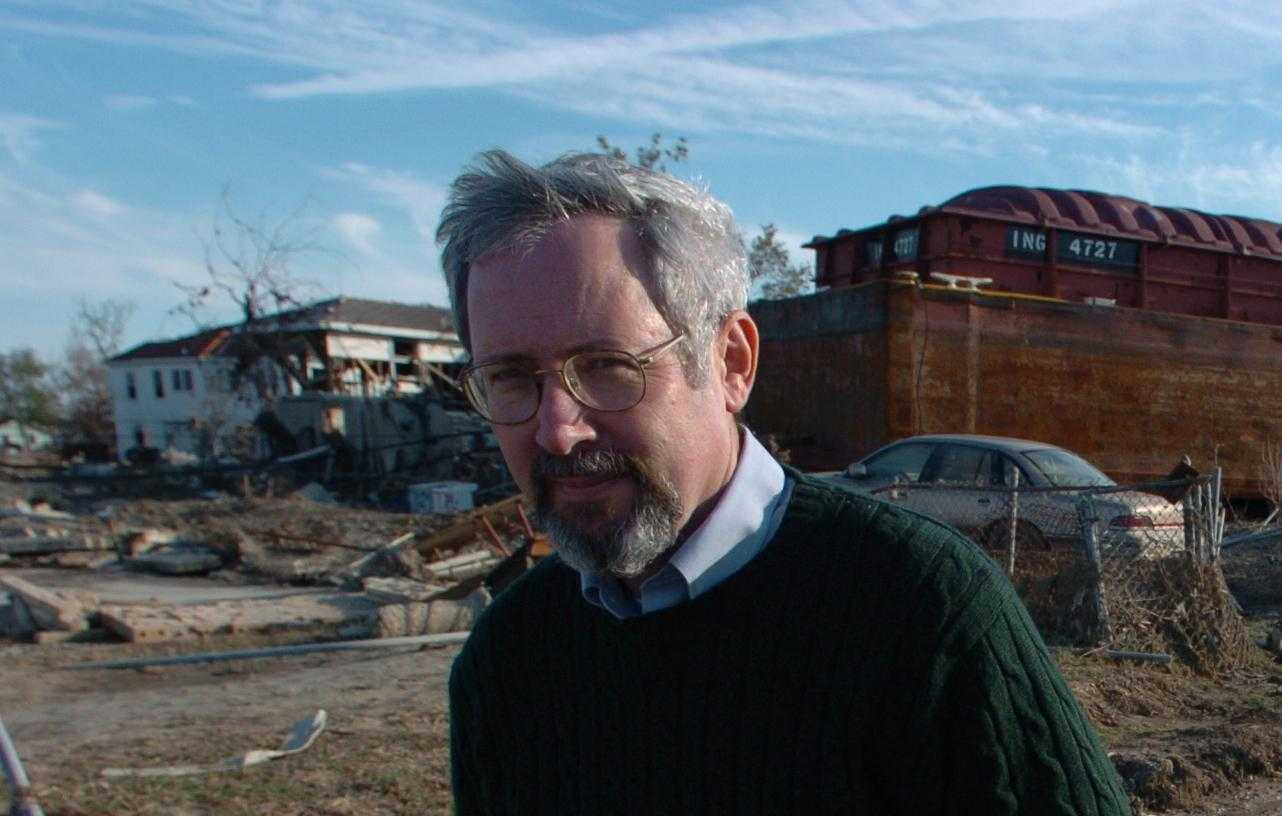
Mark Schleifstein at a barge in the Lower 9th Ward after Hurricane Katrina, in New Orleans in 2005. Photo courtesy of Mark Schleifstein
|
|
Schleifstein's staunch advocacy for the expansion of environmental coverage and commitment for teaching others about how to do stories about the environment also made him the prime candidate for the Society of Environmental Journalists' Stolberg Award this year. He helped the organization more than double in size, serving in several roles including on the board of directors. He even worked with the organization to bring philanthropic funding to the Times-Picayune to fund its first environmental desk.
Now retired, Schleifstein remains concerned about the direction of his state's coastal policies, from the levee system's inability to protect against a 200-year storm to the cancellation of one of Louisiana's most ambitious projects to reconnect the Mississippi River to wetlands. Not to mention the state's outsized contribution of greenhouse gas emissions that affects the world.
"It's a horrendous disconnect and we're going to be paying for it. In the near term, we're already paying for it," he said, never afraid to sugarcoat the science. "I am still Darth Schleffy."
|
|
|